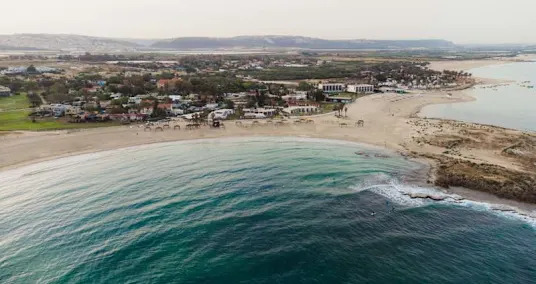
The discovery was made in an ancient shipwreck in the Dor Lagoon near the Carmel Coast, where archaeologists recovered nine pieces of unprocessed iron known as “blooms.”
Researchers from the University of Haifa said Wednesday that an underwater excavation off Israel’s northern Mediterranean coast uncovered what they described as the earliest known cargo of raw iron transported by ship, dating back around 2,600 years, Xinhua reported.
The discovery was made in an ancient shipwreck in the Dor Lagoon near the Carmel Coast, where archaeologists recovered nine pieces of unprocessed iron known as “blooms.” According to the university, the find provides direct evidence of how iron was transported in its earliest commercial stages.
The material was preserved in its original form, having solidified directly in a smelting furnace without undergoing forging or further refinement. Researchers said this distinguishes the cargo from later iron artifacts that typically show signs of shaping or tool-making.
Unlike copper and bronze, which could be melted into liquid form in ancient production processes, iron was heated with charcoal to produce a solid, porous mass. That mass was generally hammered to remove impurities and create denser material suitable for tools and implements.
The recovered blooms showed no indication of that secondary processing stage, suggesting they were transported immediately after production.

Earliest iron shipment discovered in ancient Mediterranean wreck
To determine the age and condition of the cargo, researchers conducted microscopic and chemical analyses.
Radiocarbon dating was also carried out on charred wood embedded in one of the pieces, helping confirm the timeline of the shipment. The findings were published in the journal Heritage Science.
Researchers said the cargo indicates that iron was being moved in raw form from production sites to other locations for further processing, pointing to a level of specialization in ancient manufacturing and trade networks in the Mediterranean.
The University of Haifa said the discovery provides new insight into early iron production and distribution practices in the region.
LATEST POSTS
- 1
 New movies to watch this weekend: See 'They Will Kill You' in theaters, rent 'Send Help,' stream 'Pretty Lethal' on Prime Video
 - 2Hezbollah uses ambulances, paramedic uniforms, as disguise for terrorist activity, IDF says
- 3Holocaust survivor, descendants urge High Court to allow Gaza children medical access
- 4Experts who once backed 'shaken baby' science now fight to free imprisoned caregivers
- 5Starbucks' new 'Bearista' cup is causing a stir — and is being listed on eBay for $600





- Wegovy maker Novo sharpens consumer focus with board role for Mars CEO
- Liste des pr\u00eats qui ne n\u00e9cessitent pas de remboursement
- The most effective method to Shake Hands Expertly: A Bit by bit Guide
- Hot peppers sent him to the ER. Two years later, a ‘ghost bill’ arrived.
- What to expect from the planets in 2026 — key dates and sky events
- Vote In favor of Your Favored Kind Of Vegetable
- The Best Games On the planet
- Astounding Treehouses All over the Planet
- Russian drone slams into block of flats in deadly wave of strikes across Kyiv